Abstract
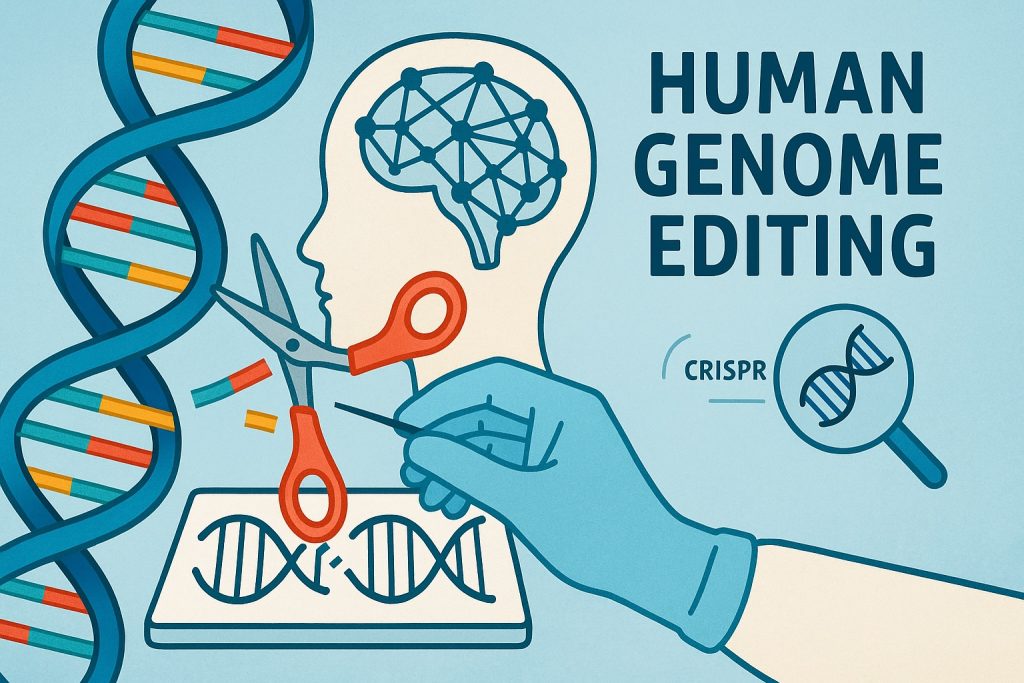
The introduction of genome-editing technologies based on the CRISPR-Cas9 system has redefined the landscape of molecular biology, enabling targeted interventions on DNA with levels of precision and versatility previously unattainable. Emerging clinical applications include the correction of mutations responsible for inherited diseases and the development of innovative therapeutic approaches, particularly in the field of cancer immunotherapy. At the same time, the possibility of using genome editing to modify non-pathological traits raises unresolved ethical, social, and regulatory concerns. This paper analyzes recent literature, assessing both the biomedical opportunities and the critical issues associated with interventions on the human genome, with particular reference to the distinction between therapeutic use and enhancement, and to the need for an international governance framework.
1. Introduction
Genome-editing technologies based on the CRISPR-Cas9 mechanism, developed following the studies of Jinek et al. (2012), represent one of the most significant advancements in contemporary biology. Unlike previous genetic engineering techniques, CRISPR allows rapid, programmable, and relatively inexpensive intervention on discrete DNA sequences. This has made it possible not only to analyze gene function with greater accuracy, but also to envision direct treatment of the genetic causes of numerous diseases.
The transformative potential of this technology, however, requires careful reflection. Genome editing can intervene on fundamental traits of human biological identity, generating consequences at both the individual and collective levels. Alongside its therapeutic promises, debates have emerged regarding safety, transgenerational effects, and the risk of non-therapeutic uses.
2. Therapeutic Applications of Genome Editing
2.1 Correction of Mutations Associated with Monogenic Disorders
The most established clinical applications involve the treatment of hereditary diseases caused by well-identified, localized mutations. Recent clinical studies have reported encouraging results in sickle cell disease and β-thalassemia through ex vivo editing of hematopoietic stem cells (Frangoul et al., 2021). This approach reduces the risks associated with germline intervention while allowing correction of the molecular cause of the disease.
2.2 CRISPR and Cancer Immunotherapy
The technology has also been applied to the engineering of T lymphocytes in order to enhance antitumor immune responses. Stadtmauer et al. (2020) observed increased persistence and specificity of modified cells, outlining an innovative path for treating tumors resistant to conventional methods. These findings indicate that CRISPR may represent a turning point for personalized medicine.
3. Beyond Therapy: The Debate on Human Enhancement
The use of CRISPR to modify non-pathological traits represents one of the most controversial issues in bioethical discussions. Although complex traits such as intelligence or physical endurance are generally influenced by multiple genes and environmental factors, it remains theoretically possible to target individual genes associated with specific functions.
The case of the genetically modified twins in China in 2018 (Knoepfler, 2020) highlighted the fragility of control mechanisms and the urgency of establishing shared international standards. Germline genome editing, in particular, involves modifications that are heritable by future generations, raising questions of intergenerational responsibility.
4. Ethical and Social Considerations
4.1 Biological Safety and Off-Target Risks
Among the main concerns are potential unintended effects resulting from off-target mutations. Despite significant improvements in guide systems and sequencing technologies, the complete elimination of this risk has not yet been achieved.
4.2 Individual Autonomy and Consent
Germline interventions raise questions related to the autonomy of future generations, who cannot express consent regarding the modifications they will inherit. This issue is central to ethical evaluations concerning the permissibility of heritable interventions.
4.3 Justice and Social Equity
Unequal access to advanced technologies could generate new forms of disparity. The possibilities of genetic enhancement could advantage socioeconomically privileged groups, contributing to the emergence of a “genetic” as well as social divide.
5. The Need for International Governance
Supranational bodies such as UNESCO and the U.S. National Academies have emphasized the need for shared policies, advocating a temporary moratorium on germline interventions until global guidelines are established. Such regulations should balance scientific innovation, safety, and the protection of human rights.
In the absence of unanimous agreement, regulation remains fragmented at the national level, with concrete risks of “genetic tourism” and uncontrolled experimentation.
6. Conclusions
CRISPR-Cas9 is an unprecedented tool capable of radically transforming medicine and the biological sciences. However, its application to human organisms requires a cautious approach based on solid experimental evidence and a regulatory framework that accounts for ethical and social implications.
The distinction between therapy and enhancement remains a fluid boundary that needs rigorous and shared definition. In this transition toward a potentially programmable biology, the ethical governance of innovation will be decisive in steering scientific progress toward outcomes genuinely aligned with collective well-being.
References
Frangoul, H., Altshuler, D., Cappellini, M. D., et al. (2021). CRISPR-Cas9 gene editing for sickle cell disease and β-thalassemia. New England Journal of Medicine, 384(3), 252–260.
Jinek, M., Chylinski, K., Fonfara, I., Hauer, M., Doudna, J. A., & Charpentier, E. (2012). A programmable dual-RNA–guided DNA endonuclease in adaptive bacterial immunity. Science, 337(6096), 816–821.
Knoepfler, P. (2020). He Jiankui’s Fateful Chinese CRISPR Babies Experiment. Nature Biotechnology, 38(1), 13–15.
National Academies of Sciences, Engineering, and Medicine. (2017). Human Genome Editing: Science, Ethics, and Governance. National Academies Press.
Stadtmauer, E. A., Fraietta, J. A., Davis, M. M., et al. (2020). CRISPR-engineered T cells in patients with refractory cancer. Science, 367(6481), eaba7365.
UNESCO. (2015). Universal Declaration on Bioethics and Human Rights. UNESCO Publishing.